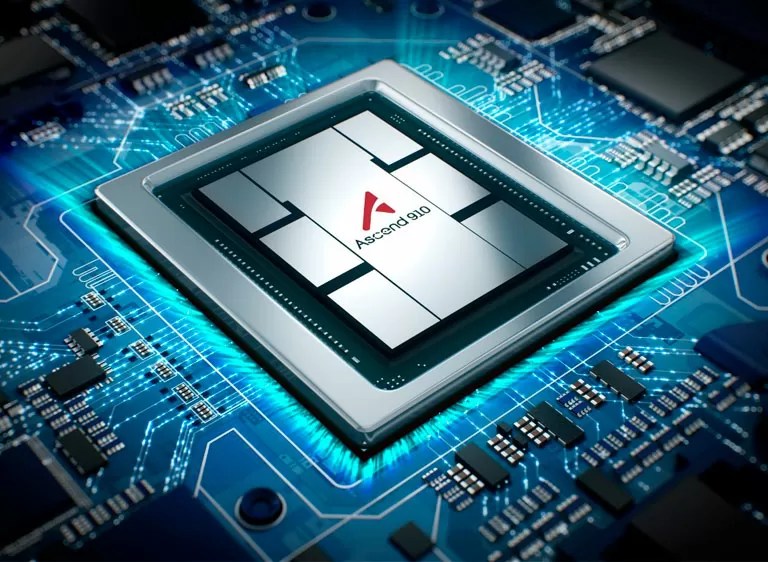
On May 13, 2025, the Bureau of Industry and Security (BIS) under the U.S. Department of Commerce announced the launch of a procedure to abolish the “Artificial Intelligence Diffusion Rule” and simultaneously strengthen global semiconductor export controls, clearly prohibiting the global use of Huawei Ascend chips. There are multiple strategic intentions behind this decision:
As a bargaining chip in trade negotiations: The United States uses the export permission of chips as a tool for trade negotiations with other countries or to obtain benefits. For example, the Trump administration promoted an agreement allowing the United Arab Emirates to import over one million advanced NVIDIA chips. The United Arab Emirates previously promised a $1.4 trillion investment in the United States in exchange for the right to purchase chips, thus obtaining more economic and political benefits.
Maintaining technological hegemony: The Huawei Ascend chip performs excellently in terms of performance and cost-effectiveness, challenging the technological superiority of the United States in the AI chip field. For example, the Ascend 910C chip uses 14nm technology, and through packaging technology, its computing power reaches 91% of that of the NVIDIA H100 chip, with an energy efficiency ratio increased by 40% and a cost reduced by about 40%. The United States’ ban on the global use of Ascend chips aims to restrict the development of Huawei’s chip technology and maintain its technological monopoly in the AI chip field, ensuring its dominant position in the global AI competition.
Protecting the interests of domestic enterprises: The Huawei Ascend chip has gradually gained market share globally, impacting the market position of U.S. enterprises. In the first quarter of 2025, NVIDIA’s revenue in the Chinese market decreased by 62% year-on-year, while the order volume of Huawei Ascend chips increased by 300%. This move by the United States is to create a more favorable market environment for domestic AI chip enterprises, reduce competition, and safeguard the profits and market share of domestic enterprises.
Dividing China’s software and hardware ecosystem: It attempts to make Chinese large-scale model software choose NVIDIA chips, maintain NVIDIA’s interests in China, and at the same time curb the export of China’s software ecosystem, hindering China from establishing an independent and complete AI industry ecosystem and making it difficult for China to form an advantage in the coordinated development of software and hardware in the AI industry.
Geopolitical games: By means of this, the United States exerts pressure on other countries to “take sides” in the Sino-US technological competition, strengthen its discourse power and influence in the global technology field, and consolidate its geopolitical advantages.


Leave a Reply