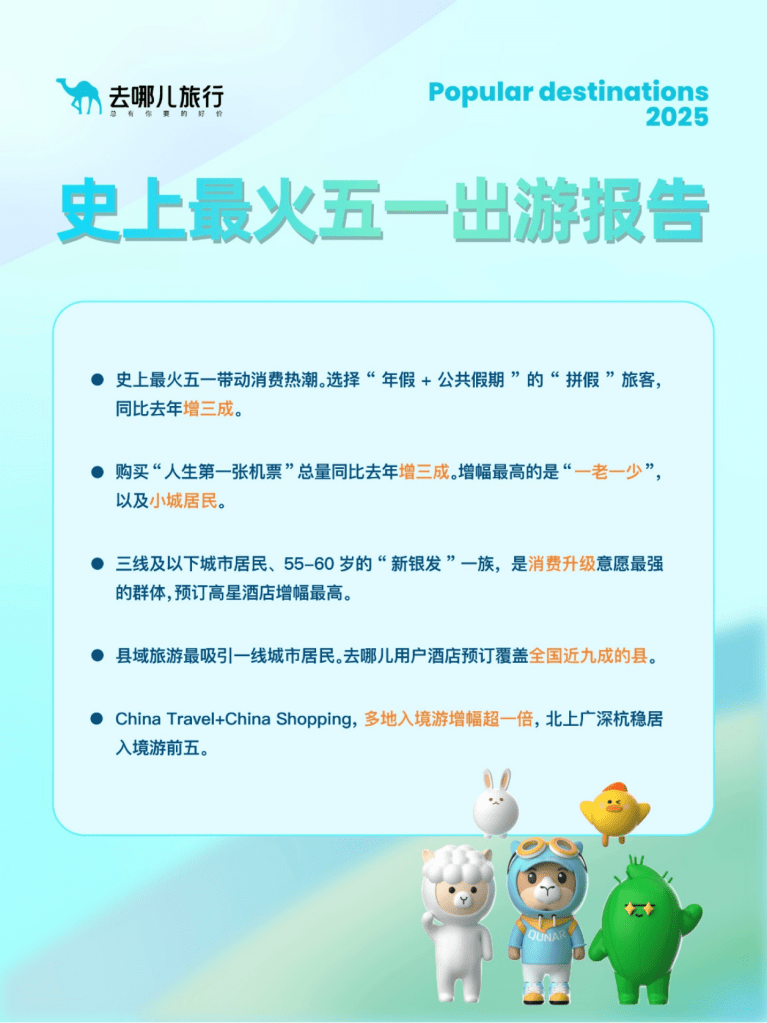
During this year’s May Day holiday, which witnessed one of the hottest travel booms in history, various remarkable travel trends have emerged, significantly driving the consumption upsurge.
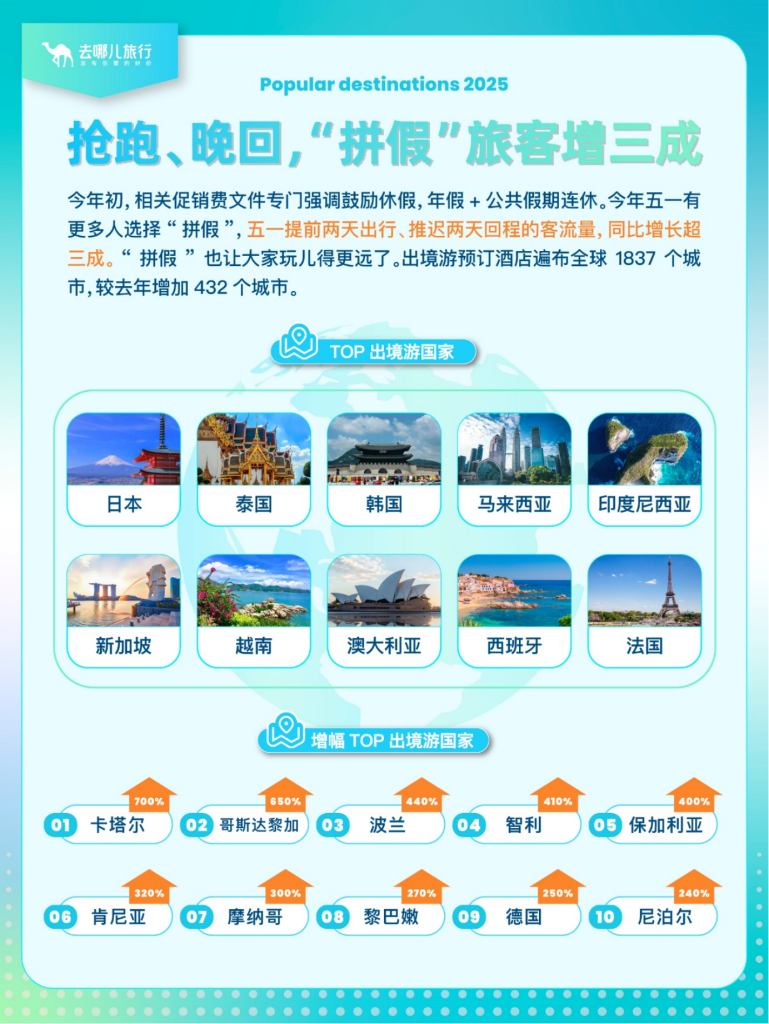
One of the striking phenomena is the increase in “leave-splicing” travelers. With the encouragement of relevant consumption promotion documents at the beginning of this year to combine annual leave with public holidays, the number of passengers who traveled two days before and returned two days after the May Day holiday increased by more than 30% compared to the same period last year. This longer vacation has enabled travelers to explore further destinations. Qunar users’ hotel reservations covered 1,837 cities globally, 432 more cities than last year.
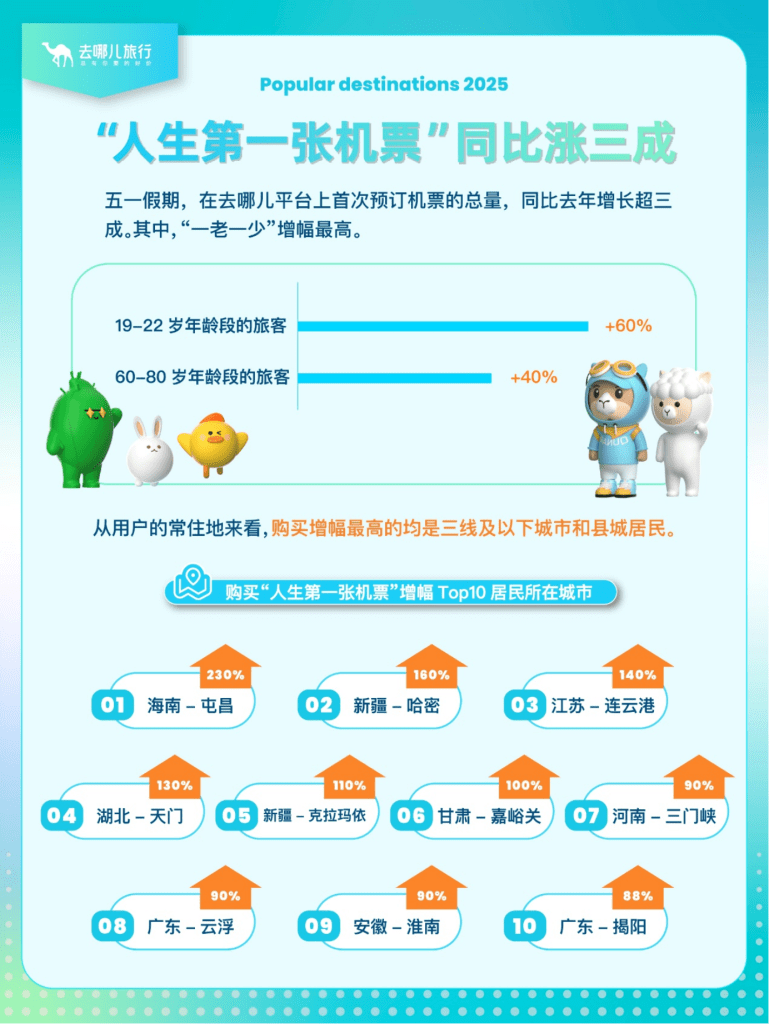
The “first flight ticket in life” purchase on the Qunar platform also saw a notable growth, with the total quantity increasing by 30% compared to last year. The groups with the highest growth rates were college students aged 19 to 22 and senior travelers over 60. The growth among residents from third-tier cities and below, as well as county towns, was higher than that in first-tier cities. Small-town residents and the “new silver-haired” generation turned out to be the groups with the strongest willingness for consumption upgrading during this May Day.
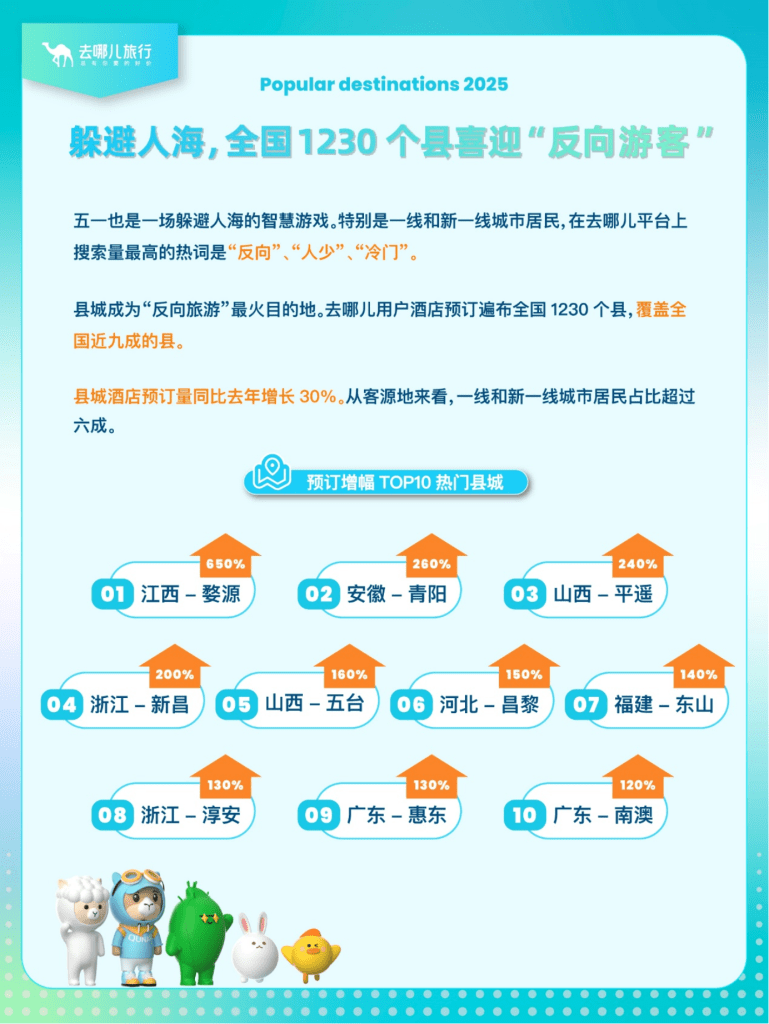
“Reverse travel” has become extremely popular, especially among residents from first-tier and new first-tier cities. They prefer to explore the hidden treasures in county towns. Qunar users’ hotel reservations spread across 1,230 counties in China, covering nearly 90% of all counties in the country. The hotel reservation volume in these counties increased by 30% year-on-year, and more than 60% of the tourists originated from first-tier and new first-tier cities.
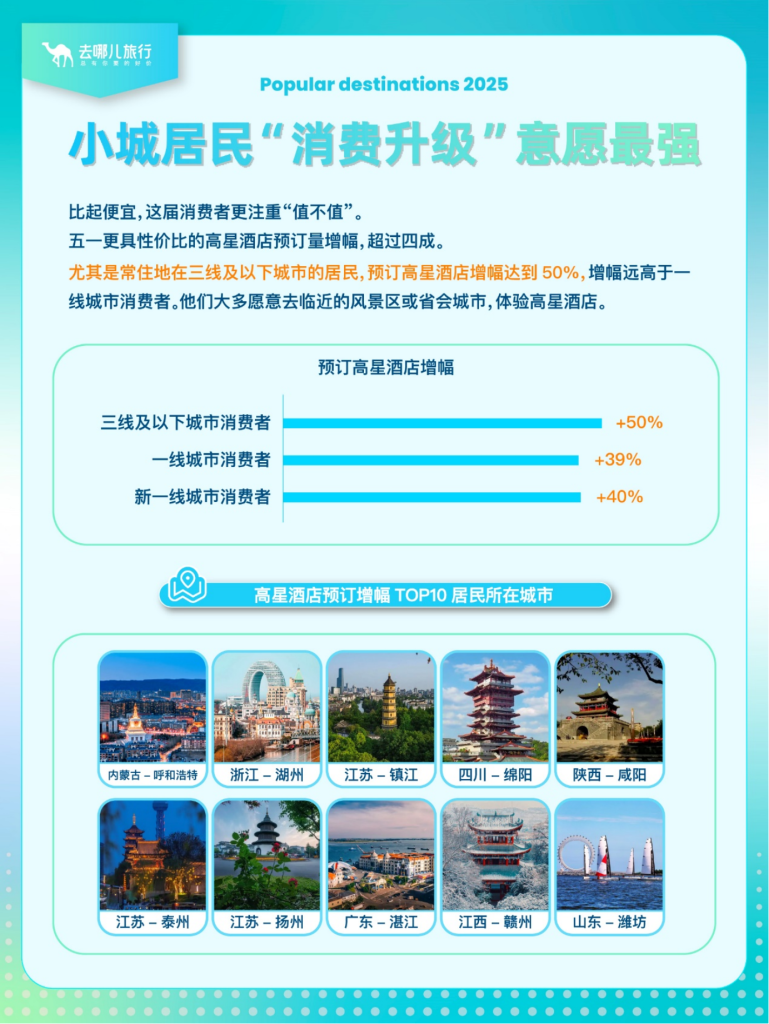
In terms of hotel bookings, high-star hotels have become more attractive due to their better cost-effectiveness. The reservation volume of high-star hotels increased by more than 40%, and for residents from third-tier cities and below, the growth rate of high-star hotel reservations reached 50%, far exceeding that of first-tier city consumers. Small-town residents in Jiangsu, Zhejiang, Guangdong, and other places showed the strongest willingness for consumption upgrading, often choosing to visit nearby scenic areas or provincial capital cities to experience high-star hotels.
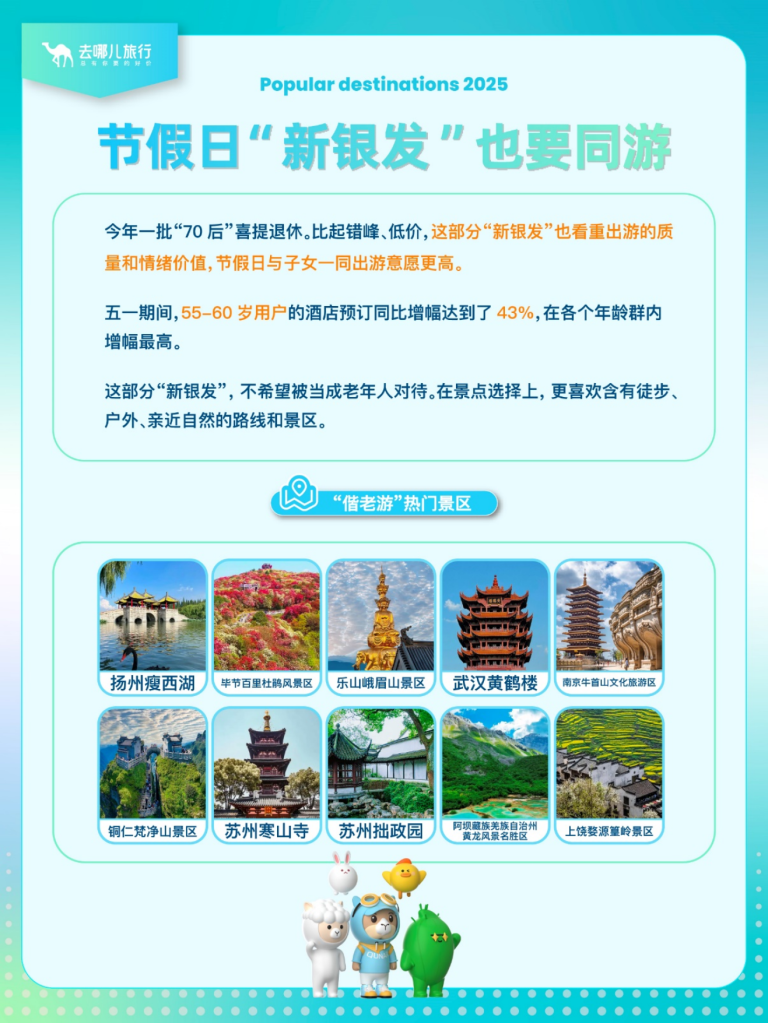
The “new silver-haired” generation, especially those aged 55 to 60, also played an active role in the May Day travel. Their hotel reservation growth rate compared to last May Day reached 43%, the highest among all age groups. With a batch of “post-70s” newly retired this year, these “new silver-haired” people value the quality and emotional value of travel during holidays, preferring to travel with their children and friends. They also tend to choose self-guided tours and prefer routes and scenic areas that involve hiking, outdoor activities, and being close to nature, showing a different preference from the “lying flat” travel style of some young people.
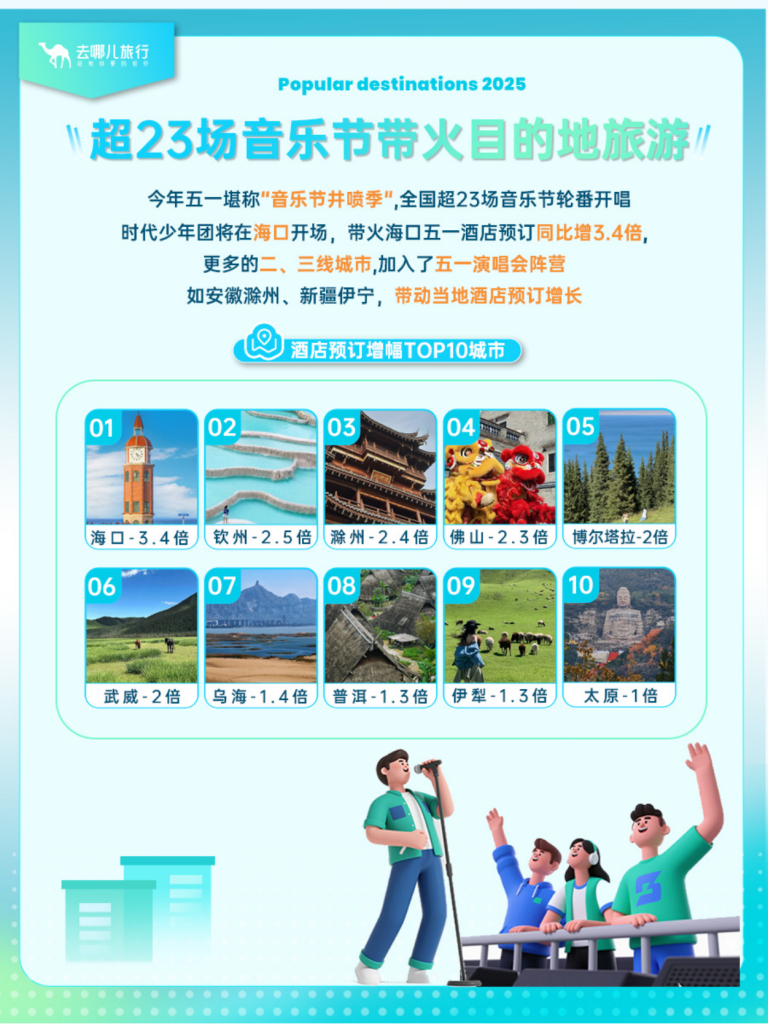
The integration of culture and tourism has become a prevailing trend. With more than 23 music festivals held across the country during the May Day holiday, the reservation of scenic area tickets on the Qunar platform increased by over 40% compared to last year. For example, Haikou witnessed the highest growth rate of hotel reservations during the May Day holiday, increasing by 3.4 times compared to last year, mainly due to the concert of the boy band Times Youth League, which became a successful example of the “concert + cultural tourism IP” model. It is estimated that every 1 yuan spent on music festival tickets can drive about 7 to 8 yuan of comprehensive consumption in the host city, including hotel accommodation, dining, and shopping. Other second and third-tier cities also joined the camp of art performances and tourism, driving local hotel reservations to new highs. For instance, Chuzhou in Anhui Province saw a 2.4-fold increase in hotel reservations during the May Day holiday due to the Hulu Guo Music Festival, and Yining in Xinjiang witnessed a 1.3-fold growth in hotel reservations due to the Yitiao Music Carnival.
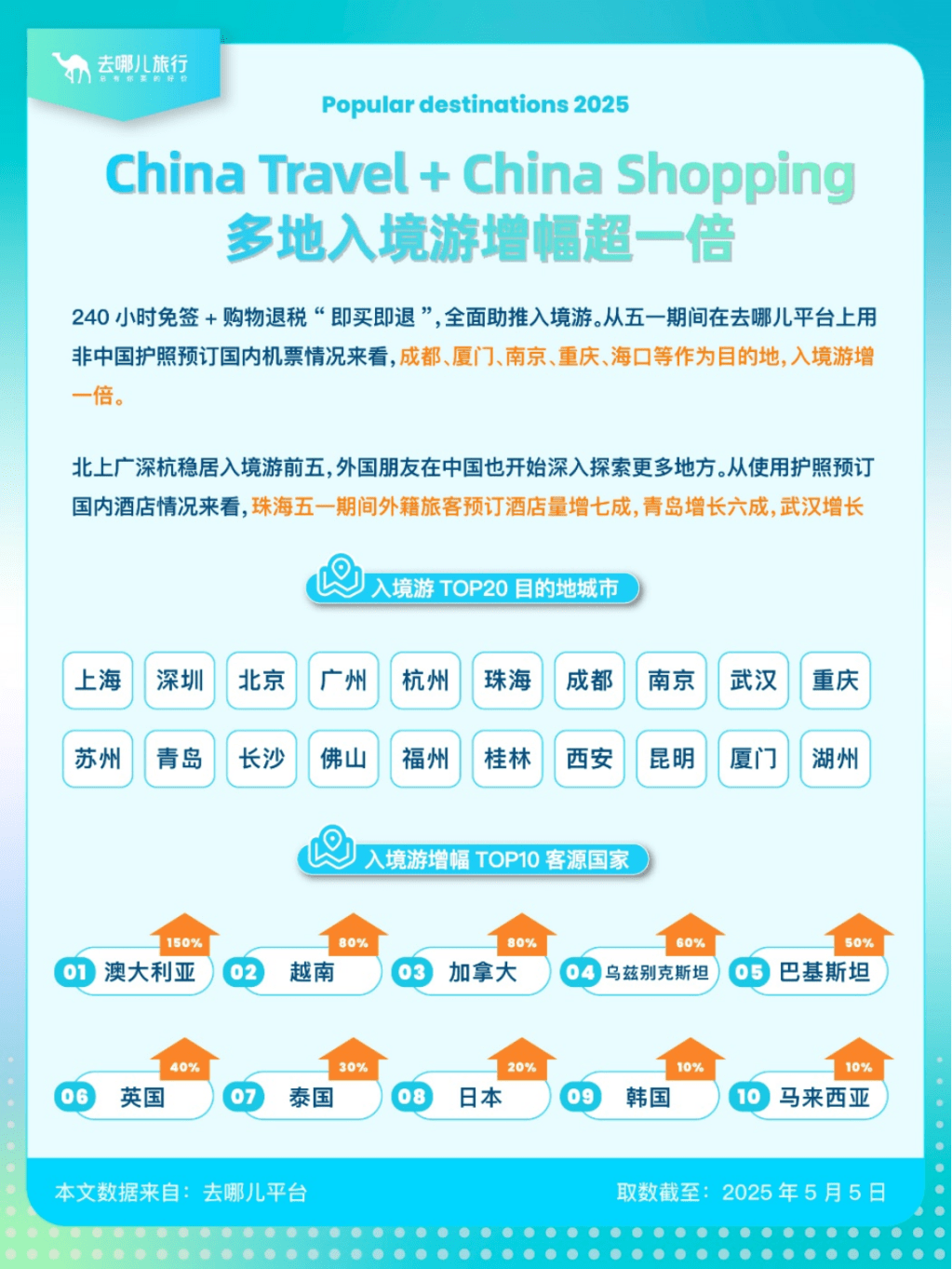
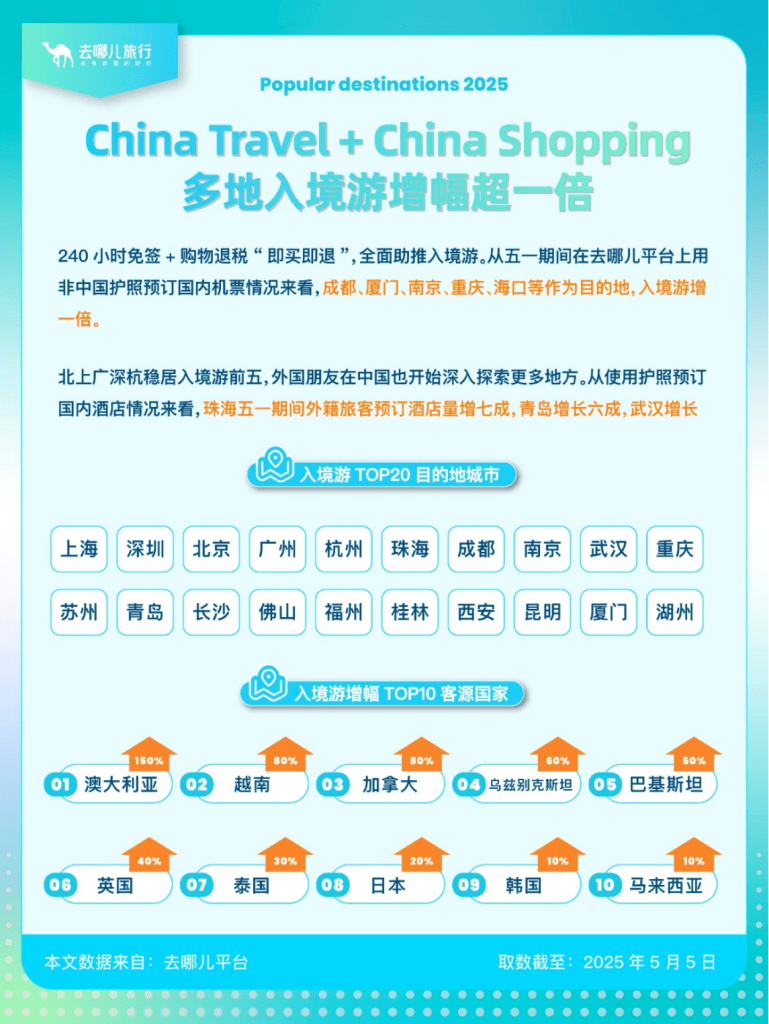
In addition, the inbound tourism in China has also experienced a significant boost. With the implementation of the 240-hour visa-free policy and the “buy and refund on the spot” tax refund for shopping, many places have seen the inbound tourism increase by more than double. According to the data of Qunar platform, where non-Chinese passport holders booked domestic flights during the May Day holiday, Beijing, Shanghai, Guangzhou, Shenzhen, and Hangzhou ranked among the top five destinations for inbound tourism. Cities like Chengdu, Xiamen, Nanjing, Chongqing, and Haikou also doubled their inbound tourism numbers. Besides first-tier cities, foreign friends are now exploring more places in China. For example, the hotel reservation volume for foreign tourists in Zhuhai during the May Day holiday increased by 70%, in Qingdao by 60%, and in Wuhan by 50%. Suzhou, Huzhou, Foshan, and other cities also entered the top 20 popular cities for inbound tourism during the May Day holiday. Among the inbound tourists, those from the United States, South Korea, and Japan accounted for the highest proportion, while Australian tourists showed the highest growth rate, reaching 1.5 times, and the growth rates of Vietnamese and Canadian tourists also exceeded 80%.
This year’s May Day holiday has truly demonstrated the vitality and diversity of China’s tourism market, with different groups and regions showing unique travel preferences and consumption trends.


Leave a Reply