
In a recent development, Xiaomi Automobile has found itself at the center of a storm of controversy regarding its high – performance model, the SU7 Ultra. May 8,as the mass – produced version of the SU7 Ultra was set to take on the challenging Nürburgring circuit, the spotlight instead remained firmly fixed on the company’s response to two major issues: “horsepower limitation” and the functionality of the carbon – fiber double – air – duct front hood.

May 8, Xiaomi Automobile released a statement titled “Answers to Concerns of Everyone” on social media platforms. This move came in response to growing discontent among users. Since its launch, the Xiaomi SU7 Ultra has attracted significant attention with features such as its “golden car logo” and an impressive “1548 horsepower” tag. However, this attention has been marred by a spate of speeding violations committed by SU7 Ultra owners. In response, some cities have required owners of this model to sign a “Driving Safety Commitment Letter”, thrusting the vehicle into the eye of a public – opinion storm.
The crux of the current controversy lies in the “Ranking Mode” function update. Through an over – the – air (OTA) upgrade, the 1548 – horsepower capacity of the SU7 Ultra was locked. To regain full horsepower, owners are now required to complete a lap – time assessment on a designated track. Xiaomi claims that this measure is to “ensure driving safety”. However, users have raised serious concerns. They question the lack of transparency in this decision – making process and accuse the company of “paid 阉割”, essentially suggesting that it’s a form of “pay – to – unlock” that was not disclosed at the time of purchase. The combined costs of track – day fees and tens of thousands of yuan in training expenses to unlock the full horsepower have made this situation even more contentious.
Adding to the discontent, Xiaomi’s response has failed to fully address users’ fears of “technical hegemony”. As one car owner put it, “It’s like buying a top – end computer but having to take an exam to use the graphics card.” Unilaterally restricting users’ access to the vehicle’s full performance capabilities has been seen by many as a form of consumer “fraud”. The subsequent withdrawal of the OTA upgrade has also raised eyebrows, highlighting what some view as a “casual” approach to software updates for the model.
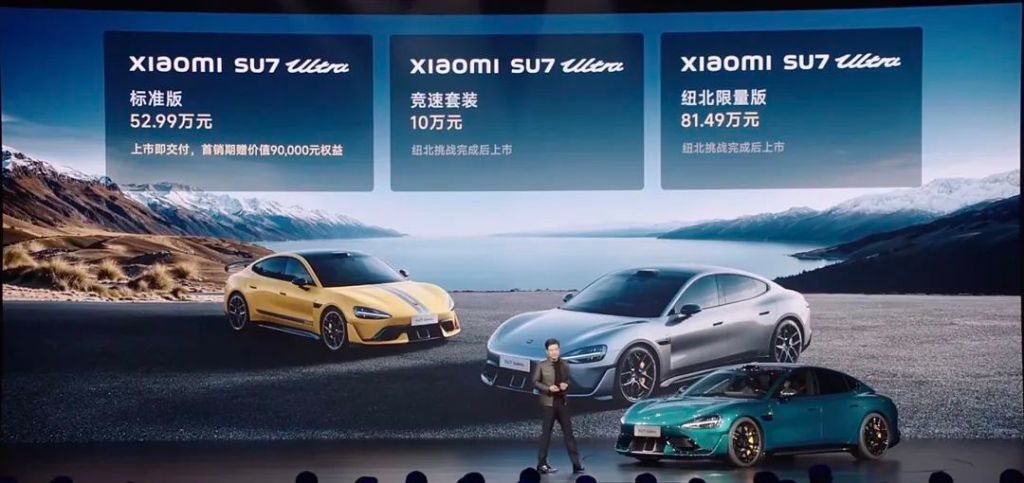
The carbon – fiber double – air – duct front hood has also come under scrutiny. User experiments have shown that this design neither effectively channels airflow to the braking system nor generates significant downforce, contradicting the advertised “efficient air – guiding” feature. While Xiaomi explains that the design was intended to “replicate the prototype car’s shape”, users feel that this explanation sidesteps the core issue of the hood’s lack of functional effectiveness.

The company’s proposed compensation measures, which include replacing the front hood with an aluminum one and offering 20,000 points, have been seen by some users as a belated attempt to rectify the situation. Instead of soothing concerns, these measures have deepened doubts about the brand’s technical prowess. This loss of trust reflects both Xiaomi’s inexperience in dealing with engineering details in car manufacturing and users’ growing weariness of “parameter – based marketing”.
In an effort to address these issues, Xiaomi has taken some initial steps. The company has suspended the controversial update, provided options for users to change their vehicle configurations, and promised to improve its communication mechanisms. However, for the long – term use of the SU7 Ultra, more comprehensive guidance is still needed.

Given that the 1548 – horsepower SU7 Ultra is priced at a relatively accessible “disruptive price” of 529,900 yuan, Xiaomi must shoulder a greater responsibility for safety education compared to traditional supercar manufacturers. For example, the company could consider implementing technologies similar to the electronic fences used in drones to limit speeds on public roads or embedding algorithms in the vehicle’s infotainment system to actively intervene in dangerous driving situations.
Furthermore, Xiaomi should not just limit vehicle performance. It should also set higher purchasing requirements to ensure that buyers have the skills to handle such high – powered vehicles. By doing so, the company can proactively manage user driving behavior rather than reacting after accidents occur.

The SU7 Ultra was meant to be Xiaomi’s foray into the high – end automotive market. However, these controversies have exposed the company’s lack of understanding in the automotive industry, having transitioned from the tech sector. From the initial excitement over the “golden car logo” to the current “speed – limit turmoil”, Xiaomi needs to clearly define the boundaries between “performance experience” and “daily use” and avoid undermining the product’s core value in the name of safety.

The ongoing disputes surrounding the Xiaomi SU7 Ultra should not be used as an excuse to impede technological progress, nor should safety responsibilities be simply passed on to the users. Only through transparent communication, appropriate technical categorization, and effective institutional support can a balance be struck between “performance equality” and public safety. For Xiaomi, this could be a pivotal moment to re – establish its brand’s sense of responsibility and move closer to becoming a mature and respected automotive enterprise.
As the situation unfolds, the eyes of the automotive world remain firmly on Xiaomi, waiting to see how the company will navigate these challenges and whether it can turn this setback into an opportunity for growth and improvement. The coming weeks will be crucial for Xiaomi, as it attempts to rebuild trust with consumers and demonstrate its commitment to resolving these complex issues.
 Chinatimenow
Leave a comment