Original by MetaInsight Agency, MetaInsight Agency, May 4, 2025, 16:35, Guangdong
In recent months, if you have been following the technology circle, especially the field of robotics, you must have been bombarded by several blockbuster news stories:
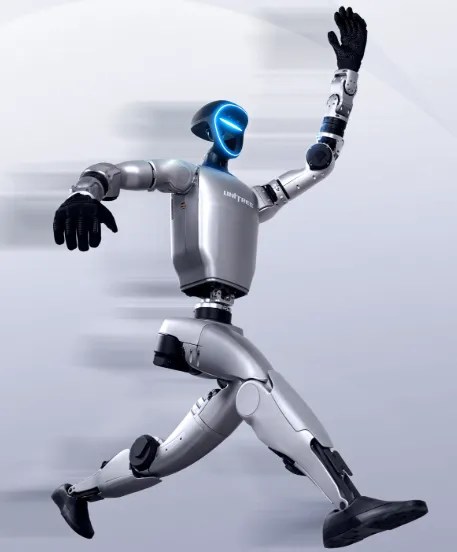
The price of Unitree Robotics’ general-purpose humanoid robot G1 is set at 99,000 yuan.
The PM01 humanoid robot launched by Zhongqing Robotics has even lowered the price threshold to 88,000 yuan.
Even more astonishingly, it is said that for the NOETIX Songyan Dynamics N2 humanoid robot, which has the unique skill of continuous somersaults, the unit price can be as low as 39,900 yuan when purchased in bulk!
From being a “treasure” in the laboratory that cost millions or even tens of millions of dollars, to now being able to “acquire” a robot with a basic humanoid form and movement ability for “only” a few tens of thousands of yuan, this huge price reduction is like a thunderclap out of the blue, instantly igniting people’s imagination of “robots entering thousands of households”.
Especially the figure of 39,900 yuan, which almost falls within the price range of a high-end smartphone or an entry-level electric vehicle.
A question that lingers in the minds of countless people has become extremely real: How far are we from that “ten-thousand-yuan-level” humanoid robot that can serve tea and water, clean the house, and even chat with us, which used to exist only in science fiction movies?
Before being carried away by the ecstasy brought about by these “price slasher” robots, we may need to take a deeper look: Are these “tens of thousands of yuan” humanoid robots really the “one” we imagined? What gaps do we still need to bridge to achieve a truly meaningful “ten-thousand-yuan-level” general-purpose humanoid robot?
The Truth Behind the “Price Dive”: A Revolution or Just the Prologue?
We must give credit to the courage and innovation of a group of Chinese robotics companies such as Unitree, Zhongqing, and NOETIX. Their bringing the price of humanoid robots into the range of less than 100,000 yuan or even less than 50,000 yuan is undoubtedly an important milestone in the development of the industry.
That they can achieve this means:
Initial Control of Core Component Costs:
The costs of core components such as servo motors, reducers, sensors, and controllers are starting to decline significantly due to domestic substitution and economies of scale. Especially for motor and drive technologies, as the foundation of a robot’s movement ability, the cost optimization of these components is the key to the price reduction.
Improvement in Engineering and Mass Production Capabilities:
Transforming a laboratory prototype into a product that can be stably produced and has a certain level of reliability requires strong engineering capabilities. These companies’ willingness to announce a clear selling price and accept pre-orders indicates that they have reached a new level in supply chain management, manufacturing, and quality control.
Shift in Market Strategy:
The “high-price for scientific research” model is gradually shifting towards the “low-price to capture the market” model. Companies hope to attract early users through lower prices, accumulate application data, iterate products, and quickly capture niche markets such as education, scientific research, and specific industrial scenarios.
However, there is still a huge gap between the current “low-price” humanoid robots and our ideal “general intelligent butler”:
Ambiguous Definition of “Ten Thousand Yuan”:
The 39,900 yuan price of the NOETIX N2 is a “bulk purchase price” and a “starting price”, which means that the single-unit retail price or the price of a more fully configured version will be higher. At the same time, this price may only be for the “hardware platform” and does not include complex software algorithms, continuous cloud services, or specific application development. It’s like buying a bare car, and there are still a lot of investments needed before it can really hit the road.
The Harsh Reality of Capabilities:
Currently, the core capabilities of robots at this price level may mainly focus on motion control, such as stable walking, going up and down stairs, and performing some preset actions (such as waving, simple handling, or even somersaulting). In aspects such as environmental perception, autonomous decision-making, fine manipulation, and human-robot interaction, they may still be relatively rudimentary.
They may be able to complete simple tasks in specific, structured environments, but they still have a long way to go before they can “read people’s expressions”, “adapt flexibly”, and “draw inferences from one case” in a complex and dynamic home environment.
You may be able to program it to pick up a cup on the table, but it may not be able to understand a generalized instruction like “I’m thirsty, please pour me a glass of water”, and it is even more difficult to handle details such as whether the cup is empty or full and whether the water temperature is appropriate.
The Boundary Between “General-Purpose” and “Special-Purpose”:
These robots are called “general-purpose humanoid robots”, mainly because they have a humanoid form and certain potential for general movement capabilities.
At this stage, in order to control costs and achieve specific functions, they may make trade-offs in design. For example, the N2 promotes itself with its amazing movement ability (continuous somersaults), which necessarily requires a focus on motion control algorithms and hardware design. However, it remains to be seen how it performs in other general capabilities (such as load capacity, battery life, and fine manipulation).
They are more like humanoid-shaped “motion platforms” or “specific task robots” rather than all-rounders.
In view of this, rather than saying that we have already entered the era of “ten-thousand-yuan-level” humanoid robots, it is more accurate to say that we have just opened the prologue of humanoid robots moving from “sky-high prices” to “affordable prices”.
The emergence of these products has greatly accelerated the commercialization process of the industry, but there are still formidable challenges before they can truly “enter ordinary households”.
The “Iceberg” of Humanoid Robot Costs: What Lies Beneath the Surface?
Why is it so difficult and costly to build a robot that is as flexible and intelligent as a human?
We can imagine the cost structure of a humanoid robot as an iceberg:
Above the Water Surface (Visible Costs)
Actuators:
That is, motors, reducers, etc. at the joints. There are a large number of them (usually dozens of degrees of freedom), and they require high precision, torque, and response speed, which are a major part of the cost. Tesla’s self-developed actuators for Optimus are considered one of the keys to its cost reduction.
Sensors:
Cameras (vision), lidar (for environmental ranging), inertial measurement units (IMUs, for attitude sensing), torque sensors (for sensing interaction forces), microphones (for hearing), etc. There are a wide variety of them, and high performance is required.
Computing Units:
They need powerful computing power to process sensor information, run AI models, and perform real-time control.
Structural Components and Materials:
Lightweight, high-strength materials and precise mechanical structure designs are required.
Energy Systems:
High-energy-density, safe, and reliable batteries and power management systems.
The Hardware Itself:
This is the most intuitive part.
Beneath the Water Surface (Hidden but Enormous Costs)
Motion Control Algorithms:
The core of achieving stable walking, balance, anti-interference, and complex movements (such as running, jumping, and somersaulting), with extremely high technical barriers.
Environmental Perception and Understanding:
Enabling the robot to understand the world, recognize objects, understand scenes, and locate itself.
Autonomous Navigation and Path Planning:
Moving safely and efficiently in unknown or dynamic environments.
Task Planning and Decision-Making:
Understanding complex instructions and autonomously planning execution steps.
Fine Manipulation and Dexterous Hands:
Achieving flexible manipulation like a human hand is one of the biggest technical challenges at present. Hands have many degrees of freedom, complex control requirements, and high sensor demands.
Natural Language Processing and Human-Robot Interaction:
Enabling the robot to understand, speak, and communicate naturally and smoothly.
AI Large Models and General Intelligence:
Integrating multi-modal AI capabilities such as large language models and visual models into the robot to endow it with learning, reasoning, and generalization abilities is the key to achieving “general-purpose” functionality, and the R&D investment is huge.
Software and Algorithms:
This is the “soul” of a humanoid robot and also a bottomless pit of costs.
System Integration and Testing:
Combining hardware and software perfectly and conducting a large number of tests and verifications in various scenarios to ensure safety and reliability, which is time-consuming, labor-intensive, and costly.
Supply Chain and Production:
Establishing a stable, efficient, and low-cost supply chain system and achieving large-scale, high-quality production require huge upfront investments.
Safety and Ethics:
Ensuring the absolute safety of the robot in an environment where it coexists with humans and addressing related ethical issues require continuous research and investment.
In simple terms, the cost of building a “physically similar” robot shell is falling rapidly; but to endow this shell with “mentally similar” intelligence and capabilities, making it truly useful, easy to use, and safe, the cost remains high, and the technical challenges are enormous.
The 39,900 yuan price of the NOETIX N2 is likely to mainly cover part of the hardware costs “above the water surface”, while the software, intelligence, application ecosystem, etc. “beneath the water surface” still require continuous investment and time accumulation.
The Road to the “Ten-Thousand-Yuan-Level”: What Catalysts Are Needed?
Despite the numerous challenges, the road to the “ten-thousand-yuan-level” general-purpose humanoid robot is not entirely hopeless.
The following key factors will become important catalysts:
Technological Breakthroughs, Especially the Evolution of AI
Multi-Modal Large Models:
The progress of AI large models (especially those that can understand multi-modal information such as language, vision, and actions) is expected to greatly reduce the barriers for robots to understand the world, interact with humans, and learn autonomously, reducing the dependence on massive manual programming and rule definition. This may be the key to achieving “general intelligence”.
Reinforcement Learning and Imitation Learning:
Allowing robots to learn skills in a simulated environment or by observing human behavior can accelerate the development of complex movement and manipulation capabilities.
Smarter Sensor Fusion and Perception Algorithms:
Improving the perception accuracy and robustness of robots in complex environments.
Breakthroughs in Dexterous Hand Technology:
Developing dexterous hands with lower costs, better performance, and simpler control.
Commoditization of Core Components
Deepening of Domestic Substitution:
With the technological accumulation and industrial development in the fields of servo motors, reducers, sensors, etc. in China, the costs of high-performance core components are expected to continue to decline.
Economies of Scale:
When the annual shipments of humanoid robots increase from the current few thousand or tens of thousands of units to hundreds of thousands, millions, or even tens of millions of units, the huge economies of scale will spread out the R&D costs, procurement costs, and manufacturing costs. This requires finding “killer applications” that can be applied on a large scale.
Maturity and Collaboration of the Industrial Chain
Standardization and Modularization:
Formulating industry standards and promoting the modular design of components and interfaces to reduce the difficulty and cost of integration.
Open Ecosystem:
Forming an open software platform and application store similar to those in the era of smartphones or PCs, attracting developers to develop various skills and applications for robots, sharing software R&D costs, and accelerating the implementation of applications.
Gradual Penetration of Application Scenarios
From B2B to B2C:
Humanoid robots are likely to first achieve commercialization in B2B scenarios such as industrial manufacturing, logistics, warehousing, security, and special operations (such as disaster relief). These scenarios have relatively controllable environments, clear tasks, and a higher tolerance for costs. The success in the B2B market will provide support for technological iteration and cost reduction.
From Simple Tasks to Complex Tasks:
Starting by replacing simple and repetitive labor and gradually expanding to service scenarios that require higher intelligence and flexibility.
Finding “Must-Have” Applications:
Just as the popularity of smartphones is inseparable from “must-have” applications such as communication, social networking, and entertainment, humanoid robots also need to find application scenarios that can truly solve pain points and create great value to drive large-scale popularization. Home services (such as elderly care and housework) have great potential, but they are also the most difficult.
How Long Do We Have to Wait for the “Ten-Thousand-Yuan-Level” Humanoid Robot?
This is a question worth trillions or even tens of trillions of US dollars.
Based on the current technological progress, cost structure, and market trends, we can make a cautious prediction (please note that technological development is often non-linear, and breakthroughs may occur at any time):
In the Next 1-3 Years (2025-2028)
Price Range:
The prices of mainstream humanoid robots will further decline and are expected to enter the range of 50,000-150,000 yuan RMB. However, “ten-thousand-yuan-level” (such as 10,000-30,000 yuan) products may still be simplified versions or “hardware platforms” with relatively single functions, targeting specific markets (such as education and exhibitions).
Capability Level:
The movement ability will continue to improve (more stable, faster, and more flexible), but there will still be obvious shortcomings in autonomous perception, decision-making, and fine manipulation. The AI capabilities will make progress, but they may still be at the level of executing preset programs or simple interactions in limited scenarios.
Main Applications:
B2B scenarios such as industry, logistics, scientific research, education, and specific commercial services (such as reception and guided tours) will be the main areas of application.
In the Next 3-7 Years (2028-2032)
Price Range:
With the maturity of technology and large-scale production, the prices of humanoid robots capable of performing more complex tasks are expected to enter the range of 30,000-80,000 yuan RMB. Truly “ten-thousand-yuan-level” products (close to 10,000 yuan) may start to appear, but their functions and performance may still be equivalent to the current “entry-level” or specific-function robots.
Capability Level:
The AI capabilities will be significantly improved, and robots may show certain autonomous learning and adaptation abilities in specific scenarios. The performance and cost of dexterous hands will be improved, and they will be able to perform some more delicate tasks. Human-robot interaction will become more natural.
Main Applications:
B2B applications will be more extensive and in-depth. Some robots may start to enter households and perform some preset, relatively simple tasks (such as fixed-point patrol, item delivery, and simple cleaning assistance), but they are still far from being an “all-purpose butler”. There may be initial trials in scenarios such as elderly care.
In the Next 7-15 Years (2032-2040)
Price Range:
This is the time window when we are most likely to see reliable-performance, relatively fully functional “ten-thousand-yuan-level” (10,000-20,000 yuan RMB) general-purpose humanoid robots appear. By then, the price may be comparable to that of today’s household appliances or cars.
Capability Level:
The general intelligence driven by AI will reach a new height. Robots will be able to understand more complex instructions, adapt to more dynamic environments, and have strong autonomous learning and problem-solving abilities. The dexterous manipulation ability will be greatly improved, and they will be able to handle most daily items. Human-robot interaction will be natural and smooth, and they may even have a certain emotional interaction ability.
Main Applications:
Home service robots are expected to start to become popular and take on some of the responsibilities of housework, elderly care, and child companionship. Applications in various industries will become more common, profoundly changing the way of social production and life.
It should be emphasized that this timeline is based on the current technological development trends. Any disruptive technological breakthroughs (especially in the fields of AI, energy, and materials) may greatly shorten or change this process.
Carnival and Calm: How Should We Welcome the Future of Humanoid Robots?
Facing the excitement brought about by the “price dive” of humanoid robots, we should not only embrace the potential of change but also maintain rational thinking:
Focus on Value Rather Than Just Price:
How much a robot costs is of course important, but what is more important is what it can do? What value can it create for us? What practical problems can it solve? If a low price is achieved only at the expense of performance and reliability, then it is of little significance.
Patience and Long-Termism:
The development of humanoid robots is a long and complex process and cannot be achieved overnight. We need to give researchers and enterprises more time and space to explore, to make mistakes, and to iterate.
Embrace Human-Robot Collaboration:
The goal of humanoid robots is not to completely replace humans but to become a capable assistant to humans in many fields, liberating humans from repetitive, arduous, and dangerous work and allowing them to engage in more creative and emotionally valuable work.
Consider Ethical and Social Impacts:
With the popularization of robots, issues such as the employment structure, social equity, data privacy, and safety ethics will become increasingly prominent, and we need to conduct in-depth discussions and make arrangements in advance.
The vast expanse of stars and the sea begin with a single step.
Returning to the original question: “How far are we from a humanoid robot costing ten thousand yuan?”
The answer may be: The “physically similar” shell is already within reach, or even touchable; but the “mentally similar” intelligent soul, the “ten-thousand-yuanlevel” product that endows it with true general-purpose capabilities, still requires us to embark on a not-so-short journey.
The 99,000 yuan of Unitree G1, the 88,000 yuan of Zhongqing PM01, and even the “starting price” of 39,900 yuan of NOETIX N2, they are like streaks of light 划过夜空,illuminating the path to the future, and also allowing us to truly feel the pulse of technological progress.
This is by no means the end, but an exciting beginning.
From the laboratory to the factory, from the factory to the warehouse and the fields, and ultimately into our homes, every step forward of humanoid robots condenses the wisdom and sweat of countless engineers and also carries humanity’s vision for a better future.
The dream of the ten-thousand-yuan level may still need time to brew and come to fruition, but one thing is certain: the era of humanoid robots arriving at an accelerated pace has already pressed the fast-forward button.
Let’s stay attentive, stay expectant, and also maintain a sense of sobriety and patience to welcome this technological wave that is bound to profoundly transform the world.
After all, although the sea of stars is far away, we have already set sail.
 Chinatimenow
Leave a comment