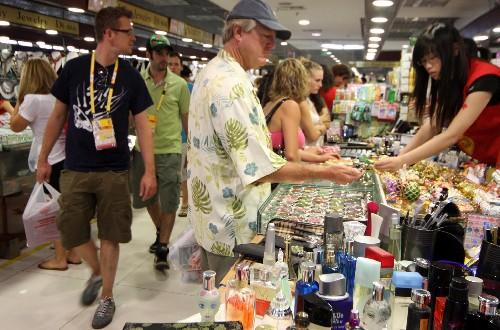
As the May Day holiday approaches, China’s tourism industry is experiencing a remarkable surge in inbound travel. Data from major travel platforms reveals a staggering 173% year-on-year increase in inbound tourism bookings this year. What’s particularly striking is that foreign visitors are no longer just here for sightseeing; many are arriving with oversized suitcases, ready to embark on shopping sprees that are transforming China into a global shopping destination.
Gone are the days when panda plush toys and tea dominated the shopping lists of international tourists. Today, their carts overflow with an eclectic mix of products. Traditional Chinese garments, trendy cultural and creative items that blend heritage with modern design, and national fashion merchandise have become must-haves. At a flagship “Beijing Gifts” store, an American tourist purchased silk shirts and jade ornaments, expressing admiration for China’s unique artistry. Custom-made Chinese dresses, praised for their craftsmanship and affordability, have also gained popularity, with many travelers opting for personalized tailoring services. The introduction of building block sets featuring Chinese mortise-and-tenon architecture, a fusion of tradition and modernity, has boosted store sales by 47% month-on-month since March.
The Chinese government is actively enhancing the shopping experience for international visitors. A series of policies, jointly rolled out by six departments including the Ministry of Commerce, aim to streamline the shopping process. The revised tax refund policy for departing tourists stands out as a game-changer. By lowering the minimum purchase threshold from 500 yuan to 200 yuan and increasing the cash refund limit from 10,000 yuan to 20,000 yuan, more travelers can enjoy tax rebates. Additionally, tax refund stores have expanded, and the “refund-on-the-spot” service allows tourists to receive rebates immediately after purchase. For instance, a 10,000-yuan item would yield an 11% tax refund of 1,100 yuan, leaving travelers with a net saving of about 900 yuan after a 2% handling fee. Pilot areas like Shanghai and Beijing have seen “refund-on-the-spot” transactions skyrocket 22 times year-on-year, 18 times faster than the national average for tax refunds. In Shanghai, American tourists Julian and his wife received a 149-yuan refund after buying 1,299-yuan ceramic tableware. With seven centralized refund points across key commercial districts and 284 out of 587 tax refund stores offering instant refunds, Shanghai’s tax-refunded sales soared 85% in the first quarter of 2025, reaching 760 million yuan.
Chengdu has emerged as a shopping hotspot, witnessing a 300% surge in foreign tourist spending. Here, prices are typically 50% lower than in Western markets; a silk scarf costing 100 euros in Europe can be found for around 500 yuan in Chengdu. Beyond affordability, the city’s favorable policies, including the tax refund program, have elevated the shopping experience. Local treasures like Shu brocade scarves and cheongsam dresses attract visitors with their elegance and cultural significance. Meanwhile, Sichuan’s signature seasonings and handicrafts have also become popular souvenirs.
In the first quarter of 2025, China welcomed 40% more foreign tourists than the previous year. “Boosting inbound consumption” has been prioritized in economic strategies and featured prominently in the 2025 Government Work Report. As more travelers seek immersive experiences, China’s diverse product range, competitive prices, convenient services, and rich cultural heritage are driving a new wave of “shopping tourism.” With continued policy support and market innovation, China is poised to solidify its position as a top destination for global shoppers.
 Chinatimenow
Leave a comment